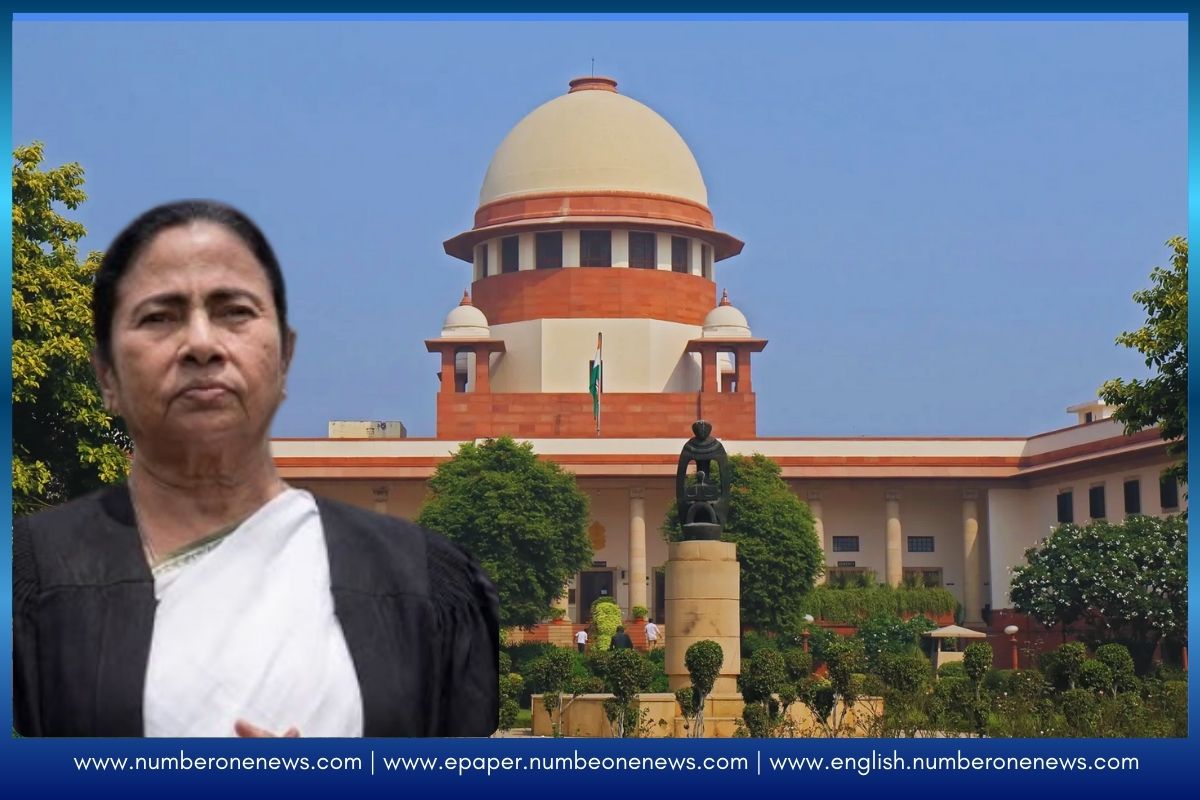
The Supreme Court of India on Wednesday heard a case related to the Special Intensive Revision (SIR) of voter lists in West Bengal. Chief Minister Mamata Banerjee appeared in court along with lawyers and alleged that the Election Commission of India was targeting West Bengal.
Mamata Banerjee said the voter list revision process, which normally takes two years, was rushed and completed in just three months. She questioned why such urgency was shown just before elections.
After hearing the arguments, a bench headed by Chief Justice Suryakant said that only genuine voters should be included in electoral rolls. The court asked the Election Commission and the West Bengal Chief Electoral Officer to submit their responses on Mamata Banerjee’s petition by February 9.
This case is historic because it is the first time a sitting Chief Minister personally appeared before the Supreme Court to argue her case. Usually, senior lawyers represent chief ministers. However, Mamata Banerjee chose to present her arguments herself.
According to her election affidavit, Mamata Banerjee completed her MA from Calcutta University in 1979 and later studied law at Jogesh Chandra Chaudhuri College in Kolkata. She completed her LLB in 1982 and also practiced as a lawyer in the Calcutta High Court during the 1980s. She filed a special application seeking permission to personally argue the case, stating that she fully understood the legal issues involved.
What Mamata Banerjee Told the Court
-
The Election Commission is trying to finish a two-year process within three months, just two months before elections.
-
The revision is happening during the farming season, causing hardship to people.
-
Over 100 people have reportedly died, and BLO officials are under extreme pressure.
-
West Bengal is being singled out, while similar exercises are not happening in Assam or the Northeast.
-
The SIR process is being used to remove voters, not to add them. Around 5.8 million names have already been deleted.
-
Micro observers appointed by the BJP are removing names by overstepping the authority of BLOs.
-
Notices issued for name mismatches should be withdrawn.
-
Married women who change their surnames after marriage are being unfairly removed from voter lists due to name differences.
Election Commission’s Stand
The Election Commission said the West Bengal government failed to provide enough Group-B officers despite repeated requests. Due to this, micro observers had to be appointed.
The Commission clarified that notices were issued with valid reasons and affected voters were allowed to appear through authorised agents. It also stated that the state provided only around 80 eligible officers, while the remaining staff were lower-level officials, leaving no option but to appoint micro observers.
Supreme Court’s Observation
Chief Justice Suryakant said it was not possible to withdraw all notices. However, he made it clear that notices should not be issued for simple spelling mistakes. The court directed the Election Commission to instruct its officials to act sensitively.
The court suggested that if the state government provides teams familiar with Bengali and local dialects, they can help verify whether errors occurred due to language issues and inform the Election Commission accordingly.