
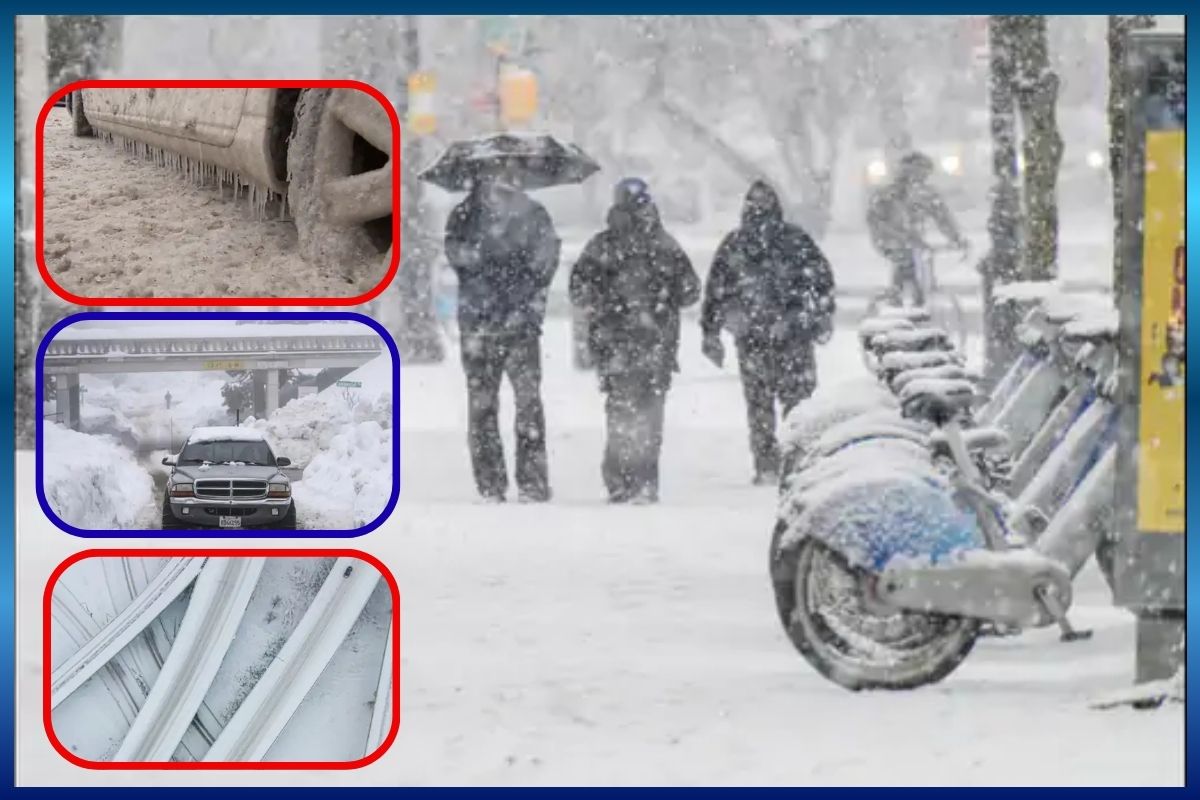
A severe winter storm has brought normal life in the United States to a standstill. Heavy snowfall from the sky, thick layers of ice on roads, and freezing winds have created fear and disruption across large parts of the country. Because of the storm, more than 10,000 flights were cancelled, and nearly one million people were forced to live without electricity. The impact has been especially severe in the eastern regions of the US.
On Sunday, the National Weather Service (NWS) warned that sub-zero temperatures could continue for several days. Officials said these dangerous conditions may seriously affect travel and basic infrastructure. Snow-covered highways, icy roads, and grounded flights have made movement extremely difficult in many states.
States Under Severe Impact
Several states have been badly affected by the winter storm, including Mississippi, Texas, Louisiana, Kentucky, Georgia, Virginia, and Alabama. The NWS also warned of heavy snowfall from the Ohio Valley to the northeastern states. At the same time, areas from the lower Mississippi Valley to the southeastern regions are facing dangerous ice accumulation, increasing the risk of power failures and accidents.
Over 213 Million People Affected
NWS meteorologist Alison Santorelli described the storm as a rare and unusual event due to its massive spread. According to estimates, the storm stretches nearly 2,000 miles, from New Mexico and Texas to New England. Around 213 million people across this wide region are directly or indirectly affected. Weather experts say such a large-scale winter storm is uncommon and highly dangerous.
Emergency Declarations Across the Country
Calling the storm historic, nearly 20 states and the District of Columbia declared weather emergencies. US President Donald Trump approved federal emergency disaster declarations for the affected areas. In a public message, he said the administration is closely monitoring all states in the storm’s path and urged people to stay safe and avoid extreme cold.
Flight Disruptions and Emergency Response
More than 10,000 flights were cancelled on Sunday alone, while thousands of others were delayed. Major airlines warned passengers to prepare for sudden schedule changes. The Federal Emergency Management Agency (FEMA) deployed emergency supplies and search-and-rescue teams to several states. Officials also advised residents to stock up on food and fuel and limit travel unless absolutely necessary.
The National Weather Service warned that even states not used to harsh winter conditions could face long power outages, widespread tree damage, and extremely dangerous travel situations due to heavy snowfall and ice.